Signed in as:
filler@godaddy.com
Client Background
Our client is a growing organization with multiple departments, including Finance, Sales, Recruiting, and Credentialing. As the company expanded, employees increasingly relied on emails, phone calls, and WhatsApp messages to report issues or request assistance. While this worked initially, it became difficult to track requests, assign ownership, and ensure timely resolutions.
The Challenge
One of the biggest concerns was the lack of visibility. Once an employee sent an email or message, there was no simple way to know whether someone had picked it up or when it would be resolved. Managers also had no clear picture of how many requests each department handled or where delays were occurring. This lack of oversight was particularly challenging when trying to integrate CRM sales optimization with their existing workflow.
The client wanted a centralized system that would make it easy for employees to submit requests while giving department heads better control over their teams' workloads.
Our Approach
After discussing the client's existing process and understanding how each department handled requests, we recommended implementing Zoho Desk as an internal help desk instead of a customer support platform. This decision also aligned well with enhancing financial operations with Zoho Books.
We started by creating separate departments within Zoho Desk for Finance, Sales, Recruiting, and Credentialing. Each department received its own ticket categories, layouts, and assignment rules so requests could automatically reach the right team without any manual intervention.
To reduce repetitive work, we configured workflows to automatically assign tickets, send notifications, update statuses, and escalate unresolved requests based on predefined service levels.
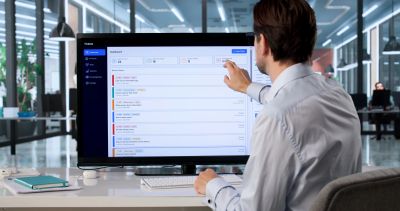
Since management wanted better visibility into operations, we also designed dashboards and reports that displayed ticket volumes, response times, pending requests, and overall team performance.
Finally, we trained both administrators and department users to ensure everyone was comfortable using the new Zoho Desk implementation before going live.
The Outcome
Within a short period, the client's support process became much more organized. Instead of searching through email threads or chat messages, every request was logged and tracked from start to finish.
Department teams knew exactly what was assigned to them, managers could monitor workloads in real-time, and employees had greater confidence that their requests would not be overlooked. Most importantly, the organization established a structured support process that can continue to scale as the business grows.
Key Features Delivered
- Multi-department help desk
- Automated ticket routing
- Custom ticket forms
- SLA and escalation rules
- Email-to-ticket conversion
- Role-based access
- Management dashboards
- Department-wise reporting
- User training and go-live support
Technologies Used
- Zoho Desk
- Zoho One
- Zoho Analytics
- Deluge Scripting
This version feels much more authentic because it tells a story instead of listing features. It focuses on the client's situation, what was done, and how the business benefited.
For a professional services website, I recommend writing every case study in this storytelling format:
- Client Background
- The Challenge
- Our Approach
- The Outcome
- Key Features Delivered
- Technologies Used
This style reads naturally, builds credibility, and is much more engaging for prospective clients than a feature-heavy, AI-style article.

Client Background
Our client is a fast-growing consulting firm offering a range of professional and compliance services. As their customer base expanded, they encountered challenges in managing leads, following up with prospects, and tracking ongoing projects through spreadsheets and email conversations.
The leadership team sought a centralized CRM to optimize their sales process, enabling the sales team to stay organized while providing management with improved visibility into the entire sales pipeline.
The Challenge
The client's sales process relied heavily on manual updates and individual follow-ups. Important customer information was dispersed across multiple files, making it challenging for the team to access accurate data when needed. Without a standardized sales process, valuable opportunities were sometimes delayed or overlooked. Additionally, managers lacked real-time insights into lead conversions, sales activities, and team performance.
To address these issues, the client needed a solution that would streamline their financial operations with Zoho Books while creating a consistent sales process throughout the organization.
Our Approach
We began by understanding how the sales team managed inquiries from the moment a lead was received until the deal was closed. Based on these discussions, we designed a CRM that accurately reflected their business process rather than forcing them into a generic system.
We customized Zoho CRM with modules, fields, layouts, and pipelines tailored to their workflow. Leads were automatically assigned to the appropriate sales representatives based on predefined rules, facilitating quick follow-ups without manual intervention.
To minimize repetitive tasks, we implemented workflows that automated email notifications, task creation, follow-up reminders, and status updates. This allowed the sales team to dedicate more time to engaging with customers rather than administrative tasks.
We also developed dashboards and reports that provided management with real-time visibility into sales performance, lead sources, conversion rates, and pipeline value. Furthermore, we executed a Zoho Desk implementation, ensuring seamless customer support management.
Finally, we conducted user training sessions to ensure the team felt comfortable using the system and could fully leverage its features from day one.
The Outcome
After implementing Zoho CRM, the client's sales process became significantly more structured and transparent. Every lead could now be tracked from the initial inquiry through to closure, providing the team with complete visibility into each opportunity.
Automated reminders improved follow-up consistency, while management gained access to accurate reports for better decision-making. Rather than spending time updating spreadsheets, the sales team focused on cultivating stronger customer relationships and closing more deals.
The CRM has become an integral part of the client's daily operations and continues to support their growth as the business expands.
Key Features Delivered
- Customized sales pipeline
- Lead and contact management
- Automated lead assignment
- Workflow automation
- Follow-up reminders and task automation
- Custom modules and fields
- Dashboards and sales reports
- Role-based security and permissions
- Email integration
- User training and go-live support
Technologies Used
- Zoho CRM
- Deluge Scripting
- Zoho Analytics
- Zoho Flow
- REST API Integrations
Business Impact
By transitioning to Zoho CRM, the client effectively replaced scattered spreadsheets and manual processes with a centralized platform that optimizes every stage of the sales cycle. The result was improved collaboration, enhanced visibility into the pipeline, more consistent follow-ups, and a scalable system that will continue to bolster the company’s future growth.

Client Background
Our client is a growing service-based business that was managing invoicing, expense tracking, and financial operations with Zoho Books using a combination of spreadsheets and manual accounting processes. As the number of clients increased, keeping financial records accurate and up to date became increasingly challenging.
The client wanted a cloud-based accounting solution that would simplify day-to-day financial operations, provide better visibility into the overall health of the business, and integrate seamlessly with their existing CRM sales optimization practices.
The Challenge
Generating invoices was a time-consuming process, and tracking payments required frequent follow-ups. Expenses were recorded manually, making it difficult to understand where money was being spent or whether invoices had been paid on time.
Additionally, the business lacked real-time financial reports, making it harder for management to make informed decisions. With multiple team members involved in billing and finance, maintaining consistency and accuracy became another challenge.
The client needed a system, particularly through Zoho Desk implementation, that could streamline their accounting process while reducing manual effort.
Our Approach
We started by reviewing the client's existing financial workflow, from creating estimates and invoices to recording payments and tracking expenses. Based on these discussions, we configured Zoho Books to match their business requirements.
We customized invoice templates to reflect the company's branding and set up customer records, tax settings, products, and services. Payment gateways were integrated so customers could pay invoices online, reducing delays in collections.
To minimize manual work, we automated recurring invoices, payment reminders, and routine financial tasks. We also configured expense categories, bank accounts, and user permissions to ensure better financial control across the organization.
Finally, we provided training to the finance team and key users, helping them transition smoothly from their previous process to Zoho Books.
The Outcome
With Zoho Books in place, the client's financial operations became much more organized and efficient. Invoices could be generated in minutes, payment tracking became effortless, and automated reminders helped improve collections without additional follow-up.
The finance team gained access to real-time reports, making it easier to monitor cash flow, outstanding invoices, and business performance. Instead of spending time on repetitive administrative work, they were able to focus on managing the company's finances more effectively.
Today, Zoho Books serves as the central platform for the client's accounting and billing operations, supporting their continued growth with a reliable and scalable financial system aligned with their CRM sales optimization efforts.
Key Features Delivered
- Customer and vendor management
- Professional invoice customization
- Online payment gateway integration
- Estimates and sales orders
- Expense tracking
- Bank account configuration and reconciliation
- Automated recurring invoices
- Payment reminders
- Financial reports and dashboards
- Role-based user access
- User training and implementation support
Technologies Used
- Zoho Books
- Zoho Inventory
- Zoho CRM Integration
- Payment Gateway Integration
- Deluge Scripting (for custom automation)
Business Impact
The implementation of Zoho Books helped the client move away from manual accounting processes and adopt a streamlined, cloud-based financial system. Billing became faster, payment collection improved, and management gained real-time visibility into the company's financial performance. With accurate records, automated processes, and better reporting, the business is now better equipped to support future growth while maintaining financial control.